
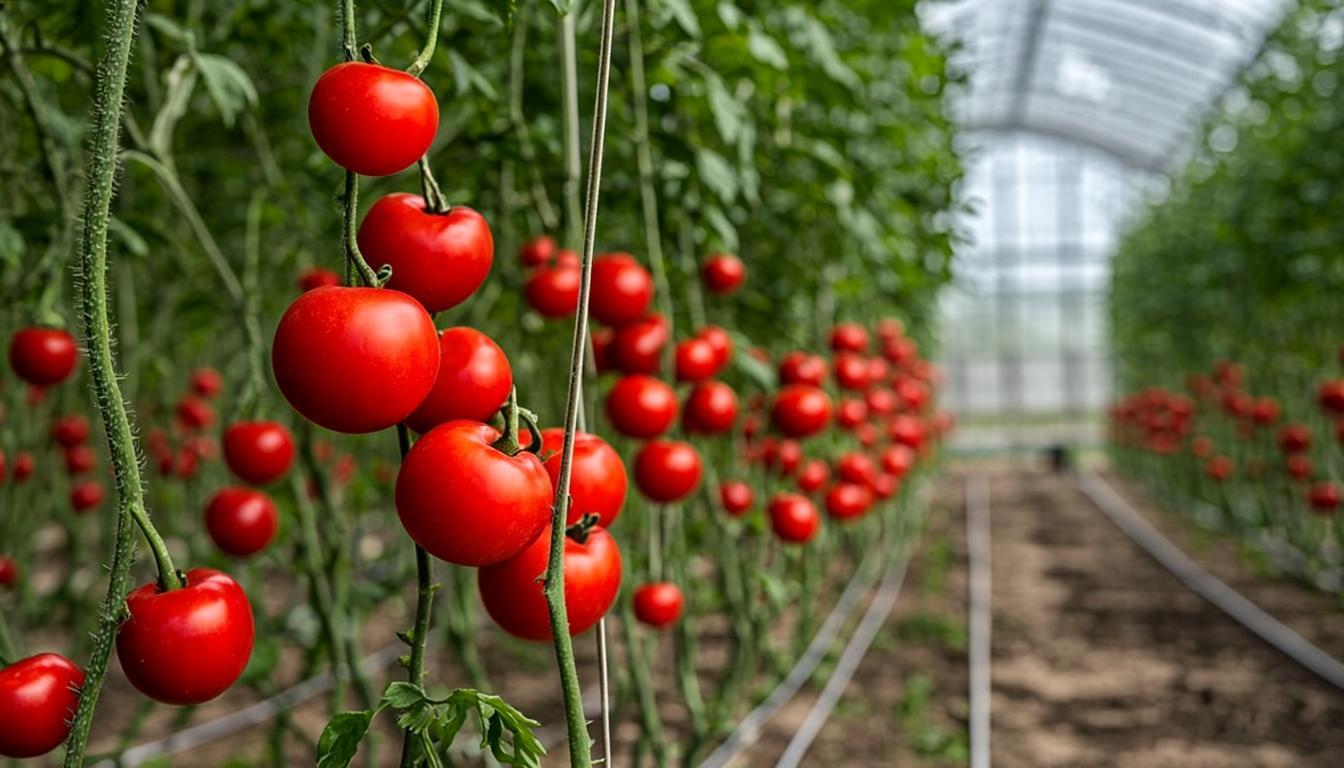
1) Fruit type & target market
Decide your market first: 150–200 g round fruit for general fresh market, 250 g+ beefsteak for premium shelves, or high-brix saladette types. Greenhouses without a clear sales plan usually take the biggest losses.
2) Growth habit & truss setting
Indeterminate varieties with short internodes and regular truss setting suit long-cycle greenhouse crops; leave 2 or 3 fruit per truss depending on variety and greenhouse conditions.
3) Disease resistance package
TYLCV and powdery mildew are the biggest greenhouse threats. If your area has a history of infection, choose varieties resistant to TYLCV, Fusarium (race 1 & 2), Verticillium and root-knot nematodes.
4) Temperature tolerance
In autumn/winter greenhouses, fruit set under low temperature is the key challenge; varieties like Emtiaz F1 with excellent low-temperature fruit set save the season. In hot periods, sufficient foliage cover protects fruit from sunscald.
5) Firmness & shelf life
With long distribution chains, wall firmness and post-harvest shelf life come first — these are listed on each variety’s technical sheet.
6) Colour & uniformity
Deep red colour and uniform fruit size per picking decide your price in the market.
7) Trial data from your own region
No datasheet replaces a pilot season. Review Aria Zist Bazr’s evaluation results across Iranian greenhouses and pick the variety that succeeded in greenhouses similar to yours.