
1) Field selection & rotation
Watermelon rewards deep, fertile, well-drained soil. Avoid back-to-back cropping; rotating with cereals or short vegetables controls soil-borne diseases like Fusarium wilt. Optimal pH is 6–7.
2) Primary nutrition
Deep-plough to 30 cm. Apply well-rotted manure (20–30 t/ha) with the final discing. Base phosphorus and potassium should follow a soil test — watermelon is potassium-hungry and deficiency directly hits sweetness and firmness.
3) Planting time
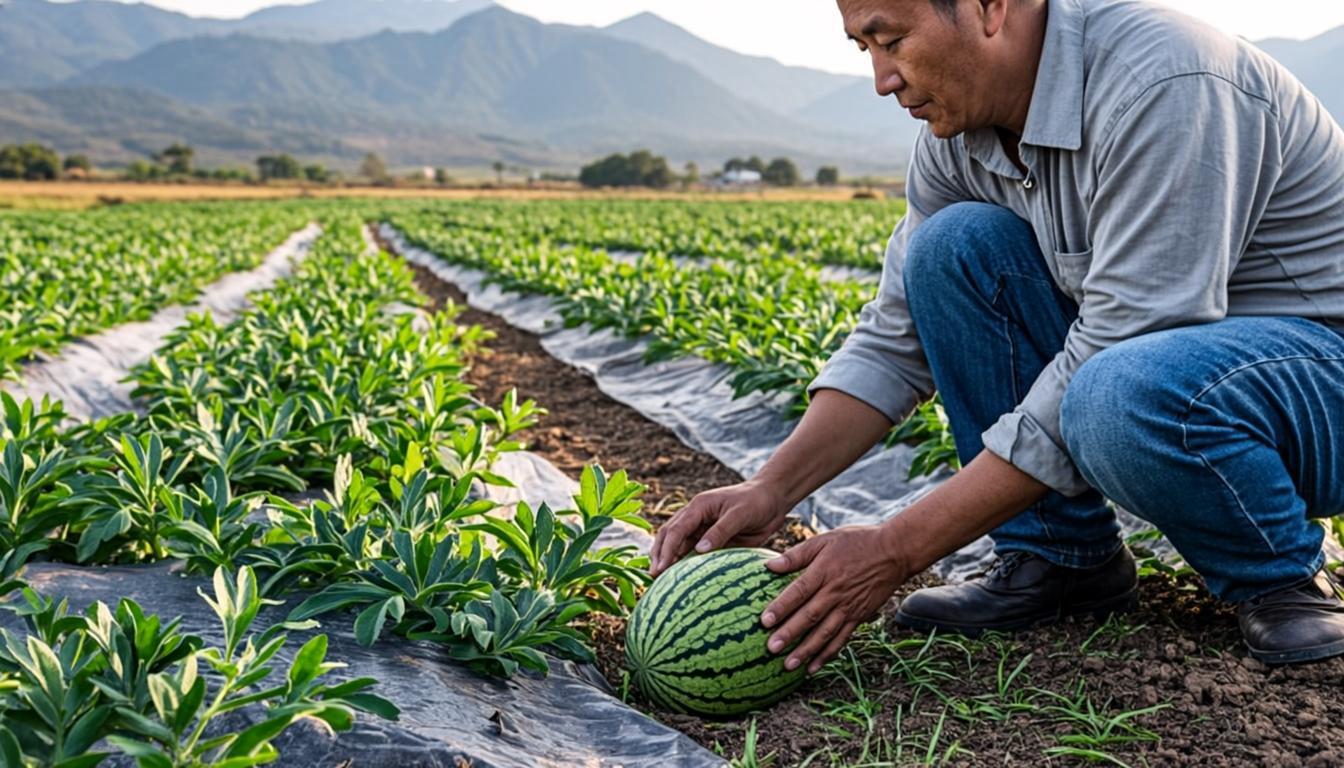
Direct-sow once soil temperature steadily reaches 16°C (mid-April to early May across most of Iran). In cool regions use transplants or plasticulture beds. Common spacing: 1.5–2 m between rows, 50–60 cm on-row.
4) Irrigation management
- Vegetative growth: regular, adequate watering for vine development;
- Fruit set: do not stress plants now — shortage makes fruit small and misshapen;
- Last two weeks of ripening: reduce irrigation to raise brix and firm the rind.
5) Variety choice
Hybrid Crimson Sweet types (Florida F1, Red River F1) suit the general fresh market; Sugar Baby types (Aquin F1) give uniform packs for premium channels. Ask advisors for regional trial reports.
6) Harvest signs
Dried tendril next to the fruit stem, cream-yellow ground spot, and a low-pitched thump. Harvest in the morning, shade-cure, and handle gently to extend shelf life.